Shock absorbers and struts both control suspension movement and help improve vehicle stability, but their structures and installation methods are different. Correctly identifying these parts is important when ordering replacements.
A shock absorber is mainly used to control the movement of the suspension spring. It reduces excessive bouncing, helps maintain tire contact with the road and improves driving comfort. A conventional shock absorber is normally installed as a separate component and is not a structural part of the suspension.
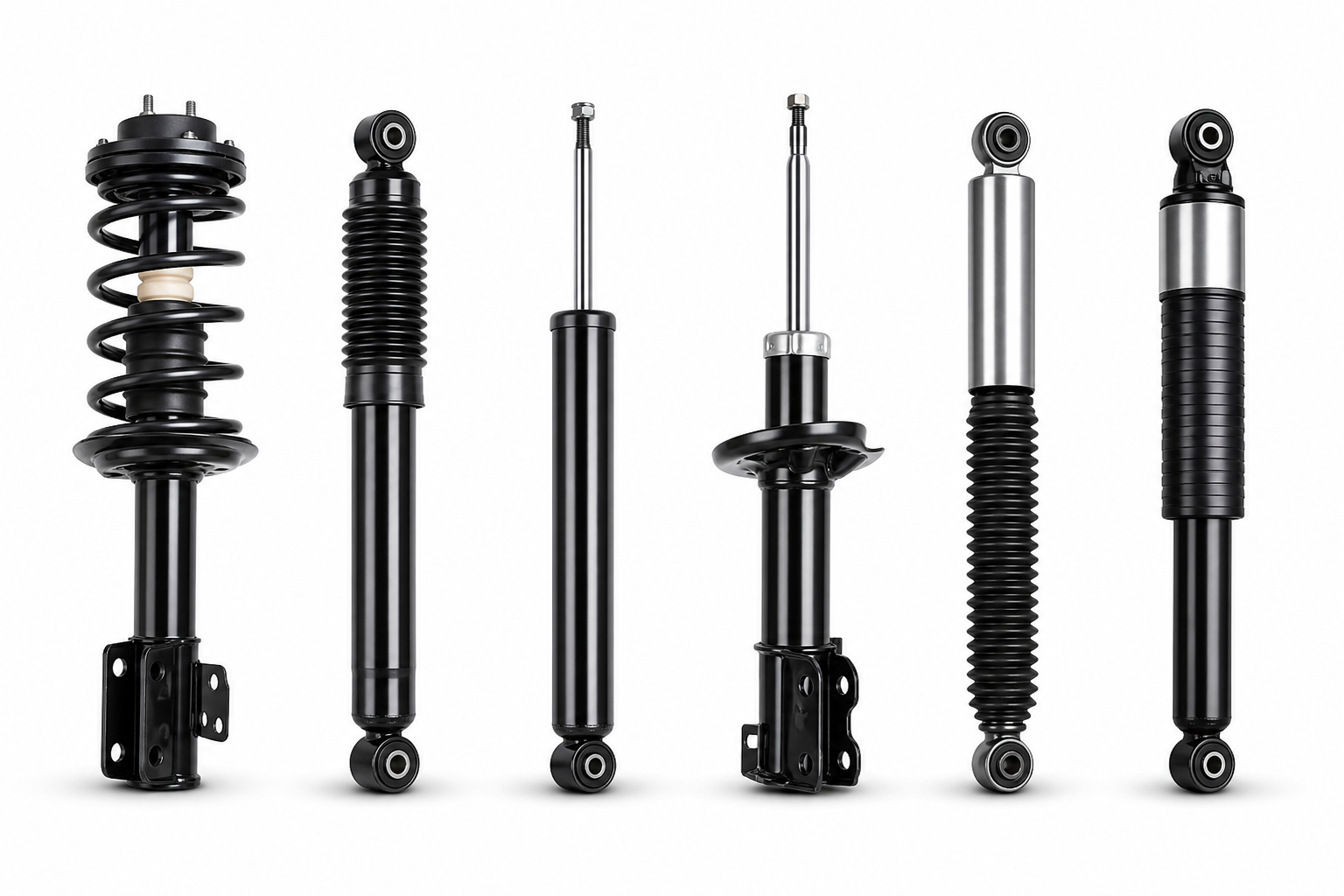
A strut combines a shock-absorbing unit with structural suspension functions. It usually connects directly to the steering knuckle and may also support the coil spring. A complete strut assembly can include the coil spring, top mount, bearing, dust cover and bump stop.
The mounting designs are also different. Some front struts are divided into left and right positions because their brackets and connection points are not identical. Many conventional shock absorbers can be installed on either side, but this depends on the vehicle design.
When ordering, do not rely only on the general product name. Always confirm the OE number, vehicle brand, model, production year and installation position. Product photos can also help distinguish between a shock absorber, bare strut, strut cartridge and complete strut assembly.
Accurate product identification helps prevent installation problems, returns and costly ordering mistakes.