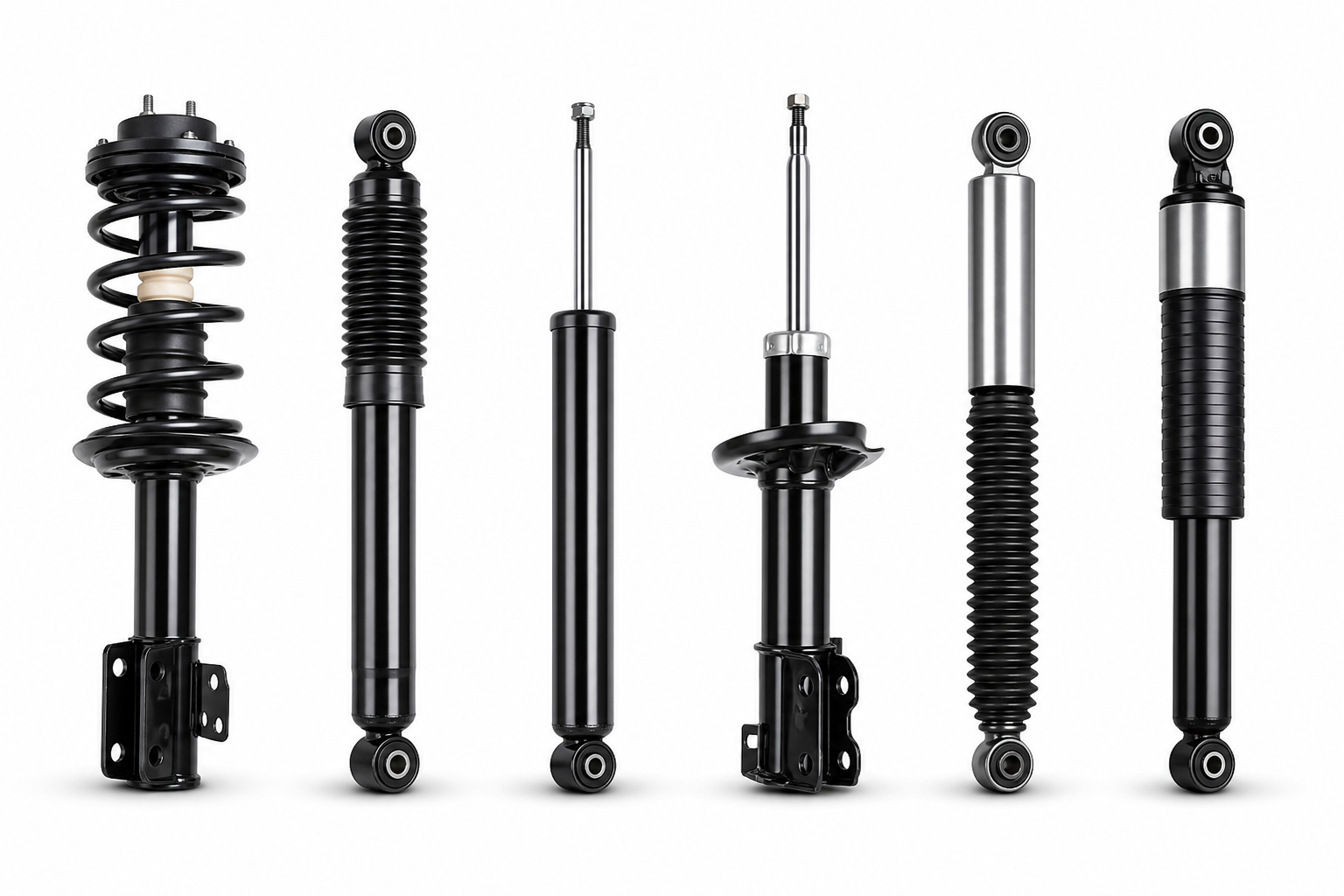
Shock absorbers control suspension movement and help keep the tires in stable contact with the road. When they become worn or damaged, vehicle comfort, handling and braking stability may gradually decline.
Visible oil leakage is one of the most common warning signs. Fresh oil or wet streaks on the shock absorber body may indicate that the internal seal has been damaged and the hydraulic oil is escaping.
Excessive bouncing after driving over a bump can also indicate weak damping performance. The vehicle may continue moving up and down because the shock absorber can no longer control the suspension spring effectively.
Other common symptoms include unusual knocking noises, excessive body roll during cornering, front-end diving during braking and poor stability during lane changes. Worn shock absorbers may also cause uneven or cupped tire wear because the tires cannot maintain consistent contact with the road.
However, similar symptoms can sometimes be caused by damaged mounts, springs, bushings or other suspension components. A complete suspension inspection should be performed before replacing the shock absorbers.
Shock absorbers are generally replaced in pairs on the same axle to help maintain balanced damping performance. Early inspection and replacement can improve driving comfort, vehicle stability and suspension reliability.